The explanation sounds almost complete.
“The road was wet.”
It explains why the tires lost traction. It explains why stopping took longer. It may explain why a collision that probably wouldn’t have happened on a dry August afternoon happened during an October commute instead.
But rain doesn’t drive cars.
People do.
When two vehicles collide on a wet Oregon road, bad weather can be an important part of the story without answering the legal question of responsibility.
The more useful question is usually this:
What did each driver do once the conditions changed?
Reconstructing Ten Seconds on a Wet Gresham Road
Imagine an October evening in Gresham.
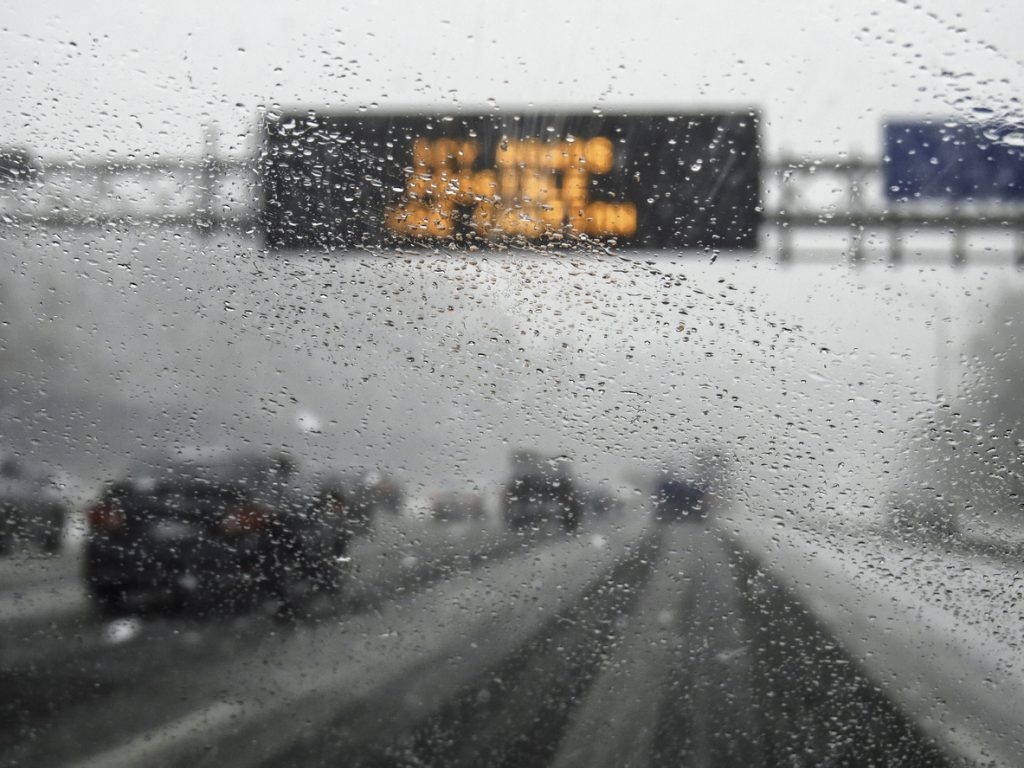
Rain has been falling steadily. Traffic is moving along Burnside. Headlights reflect off the pavement, vehicles are throwing spray behind them, and everyone has slightly less room for error than they would on a clear afternoon.
Traffic ahead slows.
Driver One brakes.
Driver Two brakes a moment later but can’t stop in time.
Impact.
Driver Two gets out and says something that sounds perfectly reasonable:
“I hit the brakes. I just slid.”
That may be exactly what happened.
But it doesn’t necessarily end the analysis.
Why was there not enough room to stop?
Was the vehicle following too closely for the conditions?
Was it traveling too fast for what the driver could see?
Were the tires in appropriate condition?
Was the driver distracted and late to recognize slowing traffic?
Or did something genuinely unexpected happen that a reasonably careful driver could not have anticipated?
“The road was wet” describes the environment.
It doesn’t necessarily explain the driver’s choices within it.
Oregon Law Accounts for Driving Conditions
Oregon law requires drivers to operate at a speed that is reasonable and prudent under existing conditions, taking into account actual and potential hazards. Weather, visibility, traffic, road conditions, and similar circumstances can therefore matter when evaluating a collision.
That doesn’t mean there is one special “rain speed” that applies every time clouds roll over Gresham.
Conditions vary.
A speed that may be reasonable on a dry, empty roadway can become inappropriate when visibility drops and stopping distances increase.
The posted speed limit is not a promise that the posted speed will be appropriate under every possible condition.
A car accident attorney East County examining a wet-weather collision may therefore need to look beyond whether either vehicle exceeded the posted limit.
Following Distance Becomes More Important When the Pavement Changes
Drivers often think about speed first.
Distance matters too.
Suppose you normally leave enough room to stop behind another vehicle under dry conditions.
Now the road is slick.
The same following distance may provide a smaller margin for error.
That matters in rear-end collisions because “I couldn’t stop” naturally raises another question:
Why not?
Sometimes there is a legitimate explanation.
Sometimes the answer is that the driver simply didn’t leave enough space for the conditions.
A personal injury lawyer in Gresham can investigate the broader circumstances rather than assuming either that every rear driver is automatically responsible or that rain excuses the collision.
Rain Can Make an Intersection Dispute Much Harder to Untangle
Now move the hypothetical crash away from a straightforward rear-end collision.
Two vehicles collide at an intersection near Powell Boulevard.
One driver says the other vehicle turned directly in front of them.
The turning driver says the approaching car was moving too quickly.
It was dark.
It was raining.
Visibility was reduced.
Suddenly, “who caused the accident?” isn’t a one-fact question.
Investigators may need to consider vehicle positions, damage, witness accounts, photographs, video if available, road conditions, traffic controls, and what each driver could reasonably see.
Weather can make evidence more important because perception becomes less reliable.
A witness standing under an umbrella 100 feet away may remember the collision differently from a driver who saw it through a rain-covered windshield.
That doesn’t make either person dishonest.
It makes reconstruction important.
“I Never Saw Them” Doesn’t Necessarily End the Question
Wet October evenings can make pedestrians and cyclists harder to see.
That creates a serious responsibility for everyone using the road.
Drivers need to account for reduced visibility.
Pedestrians and cyclists also have applicable traffic rules and should take reasonable precautions.
But after a collision, saying “I didn’t see them” doesn’t by itself explain why they weren’t seen.
Was the driver’s view obstructed?
Was lighting poor?
Was the pedestrian where a driver reasonably should have anticipated someone might be?
Was the driver looking at the roadway?
Was speed appropriate for the available visibility?
Were there other contributing circumstances?
These are factual questions.
They matter particularly around areas where people regularly move between transit stops, businesses, parking areas, and residential streets.
What About Leaves?
October introduces another Oregon driving problem that rarely looks dramatic until a vehicle starts sliding.
Wet leaves can reduce traction.
They can collect near curbs, on residential streets, and around drainage areas.
Again, their presence doesn’t automatically determine responsibility.
If a driver encounters a visibly slick roadway and continues as though conditions were dry, that may become relevant.
If a dangerous condition was genuinely impossible to anticipate, the analysis may be different.
Personal injury cases depend on facts.
That’s why broad rules such as “the weather caused it” are often less useful than they sound.
Hydroplaning Isn’t a Legal Defense by Itself
The word hydroplaning can sound like an explanation that removes human responsibility.
It doesn’t necessarily.
Hydroplaning describes what happened between the tires and the roadway.
The legal investigation may still ask why.
Vehicle speed can matter.
Tire condition can matter.
Water depth can matter.
Driver inputs can matter.
The condition of the roadway itself could potentially matter in unusual circumstances.
A vehicle hydroplaning does not automatically prove negligence.
It also doesn’t automatically excuse the driver.
The surrounding evidence still matters.
Tires Can Become Part of the Story
After many crashes, everyone focuses on the drivers.
Sometimes the vehicle deserves attention too.
Imagine someone loses control in heavy rain while traveling toward Troutdale.
If the tires were severely worn, that fact could potentially become relevant to understanding why the vehicle lost traction.
In a commercial vehicle case, maintenance issues can create an even larger evidentiary question.
A truck accident lawyer near Portland may need to examine maintenance information, vehicle condition, driver conduct, company records, and other evidence depending on the circumstances of the collision.
This is one reason serious commercial crashes shouldn’t automatically be treated like ordinary two-car insurance claims.
The Rain Can Destroy Evidence Too
Weather isn’t only part of the accident.
It can affect what remains afterward.
Tire marks may be difficult to preserve.
Debris can move.
Water can obscure roadway markings or other details.
Vehicles get towed.
Traffic resumes.
Memories begin changing almost immediately.
Photographs taken safely after a collision can sometimes capture details that disappear later: vehicle positions, standing water, visibility, damage, nearby signs, and the general scene.
Witness information can also become valuable.
That doesn’t mean someone should put themselves in danger to gather evidence on an active roadway.
Safety comes first.
But when evidence can be documented safely, early information may become important if the drivers later disagree about what happened.
More Than One Driver Can Contribute to a Collision
Not every accident has one perfectly careful driver and one completely careless driver.
Imagine Driver A is traveling too fast for the wet conditions.
Driver B makes a questionable turn.
They collide.
Now both actions may require examination.
Oregon uses comparative negligence principles in injury cases, meaning a person’s own share of responsibility can affect recovery, subject to Oregon’s legal rules.
Exactly how those rules apply depends on the facts.
This is why accepting a quick statement like “you were partly at fault, so you can’t recover anything” can be a mistake.
Likewise, assuming the other driver must carry 100 percent of the responsibility simply because they received a citation can oversimplify the case.
Oregon Drivers Are Used to Rain. That Doesn’t Make Rain Harmless.
People who have lived around Portland and East County for years may become almost dismissive about wet weather.
Of course it’s raining.
It’s Oregon.
That familiarity can create its own problem.
The first stretches of fall rain bring back conditions that weren’t part of the summer routine. Evening darkness arrives earlier. Road spray affects visibility. Stopping conditions change.
A familiar road isn’t necessarily the same road it was in July.
The safest response isn’t panic.
It’s adjustment.
Slower speeds when conditions require them.
More following distance.
Better attention to visibility.
Proper vehicle maintenance.
More room for mistakes.
If the Insurance Company Blames the Weather
An insurer may have legitimate reasons to examine weather conditions.
But “it was raining” shouldn’t automatically be accepted as a complete explanation for why a collision occurred.
If you’ve been injured in a wet-weather crash in Gresham, Rockwood, Troutdale, East Portland, or elsewhere in East County, Peterson Law Offices offers a free injury consultation to review the circumstances.
Peterson Law Offices works on a no fee unless we win basis.
You can learn more through the Peterson Law Offices homepage, read experiences from previous clients on the firm’s testimonials page, and find additional information about the practice on the office information page.
Rain Changes the Conditions. It Doesn’t Make the Decisions.
After a wet-weather collision, it is tempting to look for one simple cause.
The pavement was slick.
Visibility was poor.
The car slid.
All of those statements may be true.
But the legal question usually goes deeper.
Drivers don’t control whether October rain falls on Gresham.
They do control many of the decisions they make once it does.
How fast they travel.
How much room they leave.
Whether they’re paying attention.
Whether their vehicle is reasonably maintained.
And whether they adjust when the familiar road in front of them becomes something different.